
India · Delhi, Agra and Jaipur
Nine days on the Golden Triangle, not four
9 days · Delhi → Agra → Jaipur → Delhi
Delhi, Agra and Jaipur with room to breathe: the Taj at sunrise, a fort you can actually finish, and afternoons that belong to you.
Take this one with you
Tell us the day you land and these 9 days become a trip of your own: every stop on the map, every plan on the right day, ready for the group chat. Change whatever you like once it's yours.
Start this tripRuns right here in the browser. No app, no download.
The Golden Triangle is usually sold as four days, and four days is why so many people come home saying India exhausted them. Delhi to Agra to Jaipur and back is roughly 720 kilometres of driving. Compress that into four and you have spent two of them in a car, seen the Taj Mahal at eleven in the morning with nine thousand other people, and walked Amber Fort in the worst heat of the day because there was no other slot for it.
This one takes nine. The stops are the same three cities, because they are the right three, but each gets enough time that the good hours are available to you: dawn at the Taj, early morning at Amber, evenings when the light goes gold and the cities calm down. It ends with a night back in Delhi near the airport, because a 4am departure from Jaipur is not a fitting end to anything.
When to come
The temperature window is October to March. April and May routinely pass 40C in Rajasthan and Agra, which turns an open fort into an endurance test, and the monsoon arrives around late June and runs to September: it is not the rain that spoils it so much as the humidity sitting on top of the heat. But temperature is not the only thing to plan around here, and it is not the most important one.
Diwali moves with the lunar calendar and can fall anywhere from mid October to mid November, so late October is a judgement call rather than a rule: check the date for your year before you book anything. The burning season overlaps it and runs on through November. Delhi and Agra sit in the same airshed and get it worst. Jaipur is further from the source and usually fares better, though it is not immune.
December and January are cool and comfortable to walk in, and carry a smaller problem of their own: Delhi gets serious winter fog most mornings, which delays flights and trains and can flatten the Taj into a white blank at sunrise. That leaves February and early March as the best time of year to do this trip. Warm enough, clear enough, and past both the smoke and the fog.
How you actually get around
Delhi to Agra should be the train, and specifically the Gatimaan Express: about a hundred minutes, properly fast, and it lands you in Agra with the whole afternoon intact. A car does the same trip on the Yamuna Expressway in three to four hours depending on how Delhi lets you out of it.
Agra to Jaipur is the leg where a car earns its keep, because Fatehpur Sikri sits almost exactly on the route. It is a complete Mughal capital, built by Akbar, occupied for barely fourteen years and then abandoned, and it is the least crowded major thing on this itinerary. Doing it as a stop on a drive you were making anyway costs you an hour and a half and no extra travel.
Jaipur back to Delhi is the train again, about four and a half hours, and worth it purely for arriving in the middle of the city instead of on the wrong side of its traffic.
Delhi, twice
Delhi is two cities that happen to share a name. Old Delhi is Shahjahanabad, the Mughal capital: dense, loud, and the most alive place on this trip. New Delhi is the imperial city the British built beside it, all axis and lawn and distance. The itinerary gives you two nights at the start, and the reason it works is that you see the old city on foot and the new one from a car.
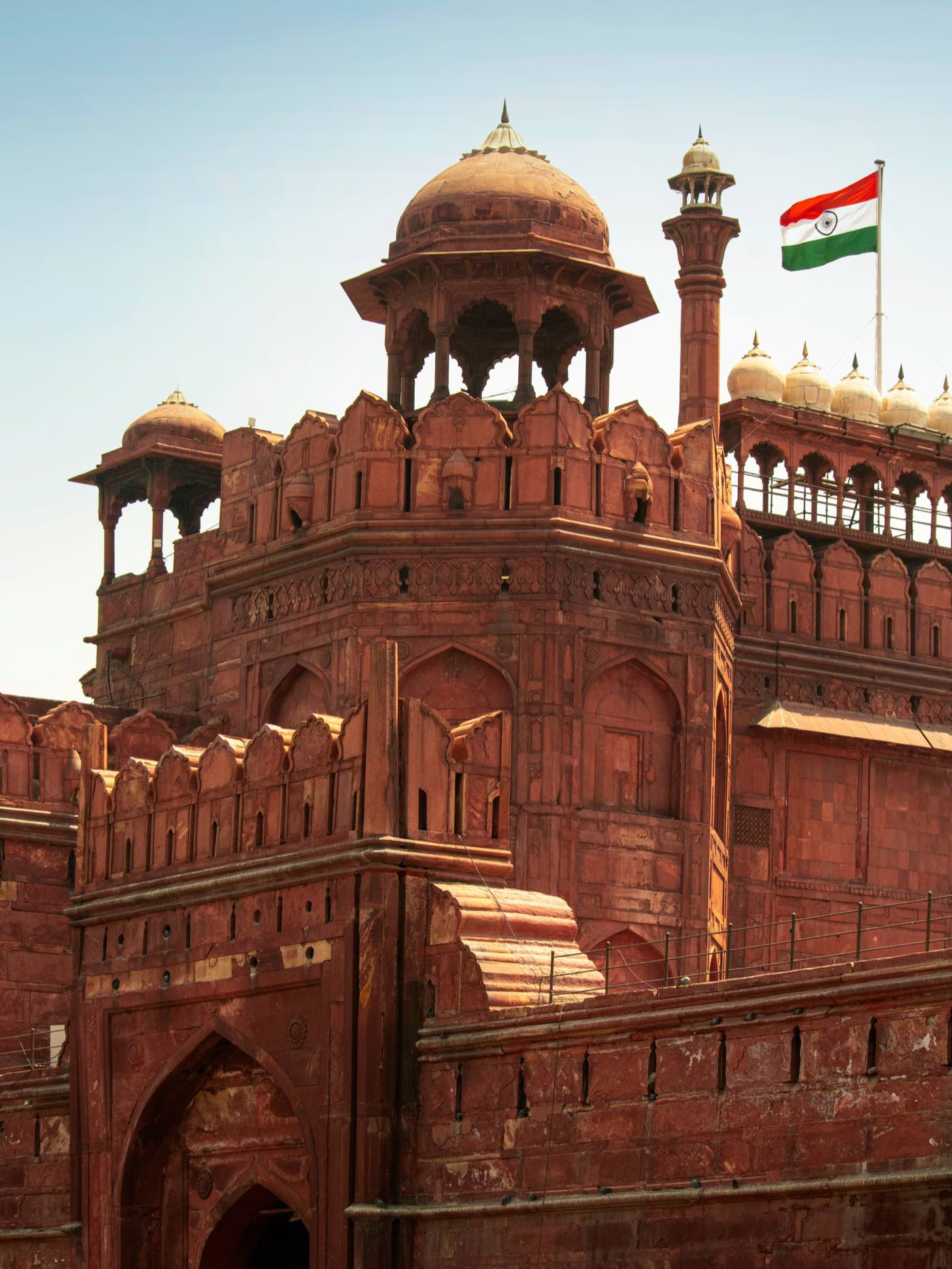
Start gently. Humayun's Tomb on the first evening is the right introduction: it is the building the Taj Mahal is descended from, it is quiet at the end of the day, and it asks nothing of you after a long flight. The next morning belongs to Old Delhi, and the three things worth doing there stand within a few minutes of each other: the Red Fort, then Jama Masjid, which is India's largest mosque and worth the courtyard alone, then the lanes of Chandni Chowk on foot. Qutub Minar in the afternoon closes the loop, because it is older than everything else you will see all week.
The final night comes back to Delhi, deliberately near the airport. It is a positioning night with nothing scheduled on it, and it exists so the last morning is a taxi and not a crisis.
Agra, and the only early start worth it
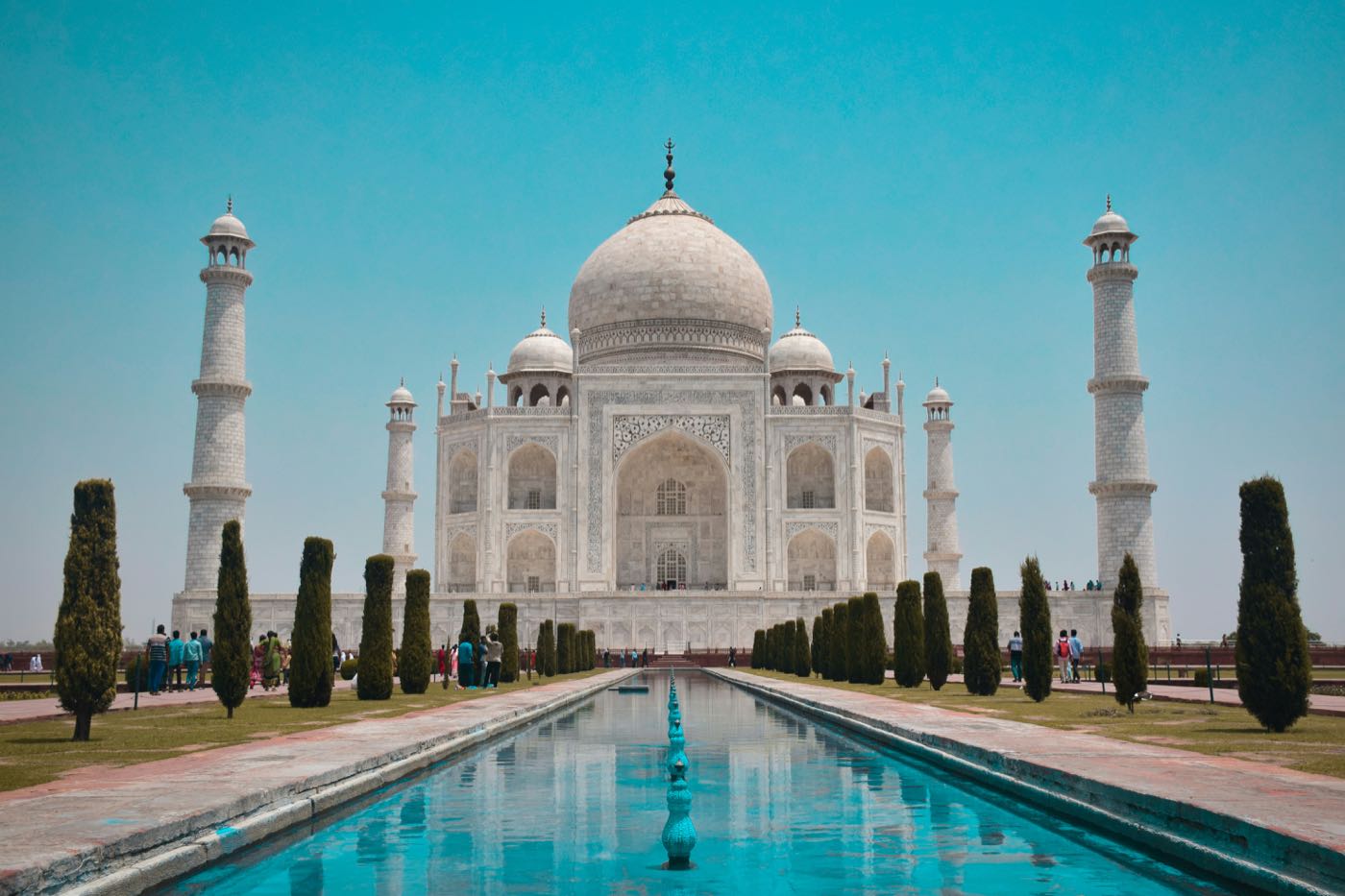
Go to the Taj Mahal at sunrise. Not mid morning, not on the way to somewhere: be at the gate before it opens. The marble is inlaid with semi precious stone and it genuinely changes colour as the light comes up, pink through white to gold, and for about forty minutes there are few enough people that you can hear the birds in the garden. By ten it is a different experience entirely, and not a better one.
That is why Agra gets two nights and why the fort comes first. Agra Fort on the arrival afternoon is a red sandstone city of its own, and it holds the trip's saddest room: the tower where Shah Jahan spent his last years under house arrest, kept by his son, with a view across the river to the tomb he had built for his wife.
Then cross the river to Mehtab Bagh in the late afternoon of the second day. It is the garden the Taj was designed to be seen from, directly opposite, and at sunset it gives you the view without the queue.
Between the two, give the afternoon to a marble workshop. The inlay on the Taj is pietra dura: shaped chips of carnelian, lapis, jasper and mother of pearl set flush into white marble, and it is still made in Agra by hand, by families who will tell you they are descended from the men who did the original. You sit and watch someone grind a petal to a tenth of a millimetre on a stone wheel, and the building you saw at dawn stops being a photograph and starts being a hundred thousand hours of somebody's work. It is the most interesting hour in Agra that does not have a queue.
Jaipur, which needs three
Jaipur is the one people underestimate. It is a planned city from 1727, laid out on a grid with nine blocks, painted pink in 1876 and kept that way since. Three nights is not indulgent here: Amber Fort alone is a serious half day, and the old city rewards being walked rather than driven between photo stops.
Amber goes early, for the same reason as the Taj. It is a hillside fort of mirrored halls and courtyards above a lake, and it is hot and busy by eleven. Afterwards, Panna Meena ka Kund is five minutes away: a sixteenth century stepwell of criss crossing staircases, usually near empty, and one of the most photographed corners of Rajasthan for good reason.
Keep the City Palace and Jantar Mantar together on the following morning, because they are neighbours. Jantar Mantar is a set of eighteen enormous stone astronomical instruments built in the 1730s, including a sundial some twenty seven metres high that is accurate to a couple of seconds. It is the strangest and best thing in the city.
The last Jaipur afternoon has nothing scheduled on it, and the best optional use of it is a rug workshop. Jaipur has been a weaving and block printing city for centuries, and a good workshop will walk you through the whole thing before anyone says a word about money: the wool, the natural dyes, the knots tied by hand at a rate that makes a room-sized carpet a matter of months. Whether or not you buy anything, it is a better hour than another fort.
I bought one. It is the most beautiful rug I have ever seen, it is on the floor at home, and it puts me back in that room faster than any photograph from the trip does. That is the honest reason this afternoon is in the itinerary at all. If rugs are not your thing, the bazaars around Johari and Bapu are right there, or a rooftop with a view of Nahargarh, or genuinely nothing.
The itinerary, day by day
8 nights · Delhi → Agra → Jaipur → Delhi
Delhi
Nights 1–2Two nights somewhere central and quiet, ideally with a courtyard. Spend a little above the cheapest tier here: reliable hot water is the thing that varies.
- Day 1 · EveningHumayun's Tomb at golden hourThe building the Taj Mahal is descended from, and quiet at the end of the day. The right thing to do on a jetlagged evening.
- Day 2 · MorningThe Red FortShah Jahan's Delhi citadel, and the start of the Old Delhi walk. Closed on Mondays.
- Day 2 · MiddayJama Masjid, then Chandni Chowk on footIndia's largest mosque, a few minutes from the fort, then the lanes behind it. Shoes off and shoulders covered at the mosque.
- Day 2 · AfternoonQutub MinarOlder than everything else on this trip by centuries.
- Delhi → AgraDay 3 · By train, about 1¾ hoursAbout a hundred minutes, and it lands you in Agra with the afternoon still ahead of you.Book ahead: The Gatimaan Express books out, especially in season. Reserve as soon as the window opens, which is usually 60 days ahead.
Agra
Nights 3–4Two nights on the quiet side of Taj Ganj, close enough to walk to the east gate before dawn. Check the hot water works before you unpack.
- Day 3 · AfternoonAgra FortA red sandstone city in its own right. The tower where Shah Jahan was held by his son looks across the river at the Taj.
- Day 4 · MorningThe Taj Mahal at sunriseBe at the gate before it opens. Closed every Friday, and a different, worse experience after ten.
- Day 4 · AfternoonA marble inlay workshopOptional, and the best thing on this trip that is not a monument. The craft is pietra dura, the same inlay that covers the Taj, and watching it done by hand explains that building better than any guide does.
- Day 4 · EveningMehtab Bagh, across the riverThe garden the Taj was meant to be viewed from. Same building, no queue.
- Agra → JaipurDay 5 · By road, about 5 hoursBy road on purpose, because Fatehpur Sikri sits almost exactly on the route. Budget ninety minutes there and it costs you no extra travel at all.
Jaipur
Nights 5–7Three nights inside or just outside the old city walls, so the evenings are walkable.
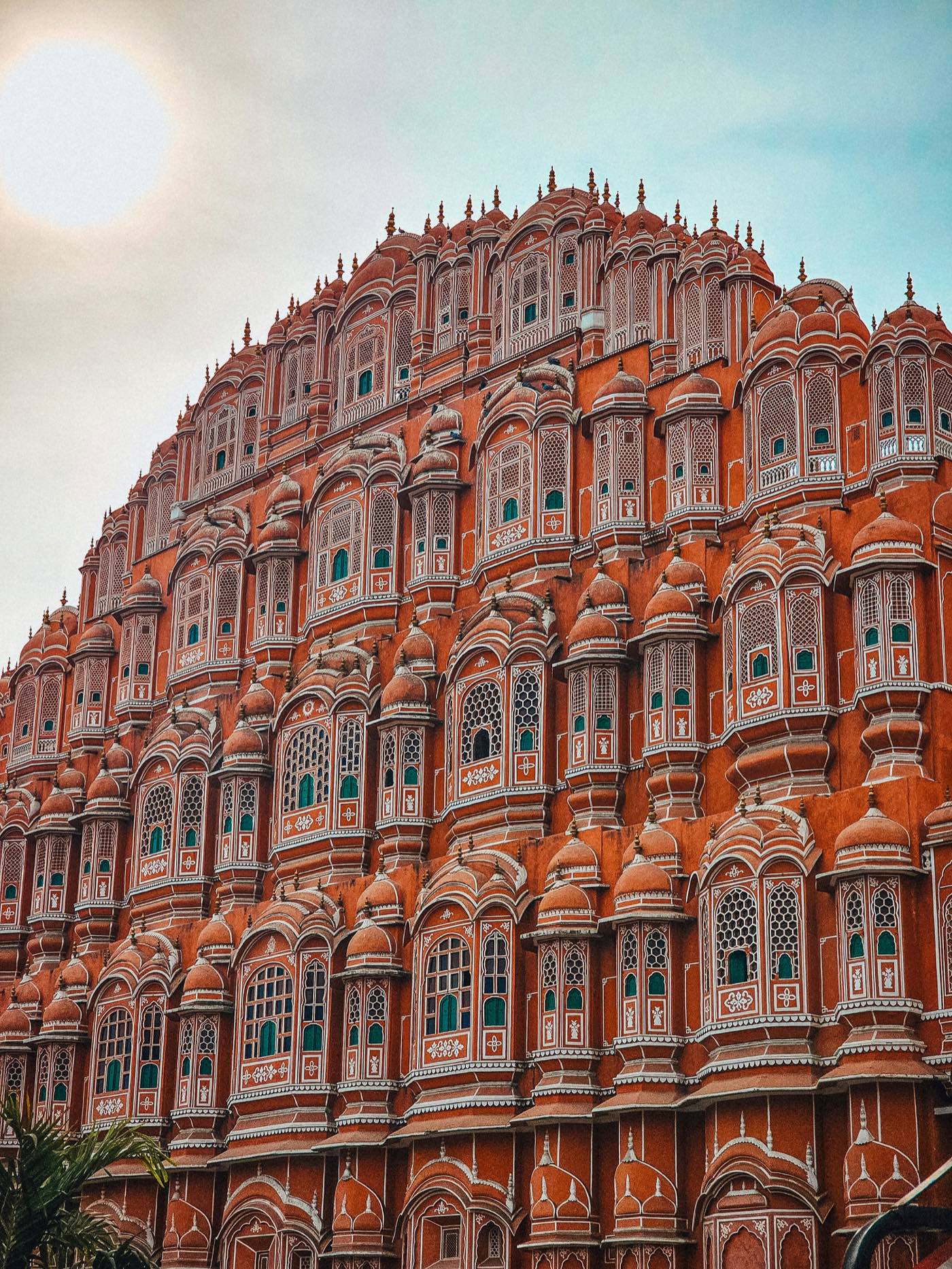
- Day 5 · EveningHawa Mahal from the streetBest seen from the pavement opposite, in the late light. It is a facade, and that is the point of it.
- Day 6 · MorningAmber FortGo early. Mirrored halls and courtyards above a lake, and unbearable by late morning in any warm month.
- Day 6 · AfternoonPanna Meena ka Kund stepwellFive minutes from Amber and usually almost empty. Criss crossing staircases, sixteenth century.
- Day 7 · MorningCity Palace and Jantar MantarNeighbours, so do them together. The sundial at Jantar Mantar is twenty seven metres high and accurate to seconds.
- Day 7 · AfternoonWatch a rug being made, or do nothingOptional. A proper weaving workshop will show you the knotting and the dyeing before anyone mentions buying, and it is genuinely absorbing. Otherwise: Johari and Bapu bazaars, or a rooftop, or neither.
- Jaipur → DelhiDay 8 · By train, about 4½ hoursWorth it over the road for arriving in the middle of the city rather than on the wrong side of its traffic.Book ahead: Reserved seats on the Jaipur to Delhi services go early in season. Book with the Gatimaan.
Delhi
Night 8One night near the airport, not in the centre. This is a positioning night and nothing more.
- Delhi → Indira Gandhi International AirportDay 9 · By road, about 1 hourShort, but Delhi traffic is the variable. The last night is booked near the airport precisely so this is a taxi and not a gamble.
Where to stay and what to book are priced live when you open the trip, never printed here, because prices in an article are wrong within a month. Some booking links pay waddlio a commission, and the app says so on the link itself.
Ready when you are.
Pick a start date and the whole thing lands in your trip, dated. Then send one link to everyone who's coming.
Start this tripAll guides