
Sri Lanka · Cultural Triangle to the south coast
Eleven days in Sri Lanka, without the 6am bus
11 days · Colombo → Sigiriya → Kandy → Ella → Tissamaharama → Mirissa
The Cultural Triangle, the hill country, one safari and a beach to finish, at a pace that leaves room for lunch.
Take this one with you
Tell us the day you land and these 11 days become a trip of your own: every stop on the map, every plan on the right day, ready for the group chat. Change whatever you like once it's yours.
Start this tripRuns right here in the browser. No app, no download.
Most Sri Lanka itineraries of this length are really a fortnight with the sleep taken out. They move you every night, start at five in the morning, and treat the country as a list of things to have seen rather than a place to be in. This one has six stops across eleven days, and four of them are two-nighters on purpose.
It runs from the west coast up into the Cultural Triangle, back down through the hills, out to the dry southeast for a safari, and along the south coast to finish: Colombo, Sigiriya, Kandy, Ella, Tissamaharama and Mirissa. Sri Lanka is small, about the size of Ireland, and that is the whole trick of it. You can go from a city to an ancient rock fortress to tea country to a national park to a beach without ever spending a full day in a vehicle.
When to come
Sri Lanka has two monsoons rather than one, which sounds worse than it is: they hit opposite halves of the island at opposite times, so there is almost always somewhere dry. The southwest monsoon soaks the west and south coasts and the hill country from roughly May to September. The northeast monsoon does the same to the north and east from around December to February.
Most of this route is west, hill country and south, so it wants the southwest's dry window: December through March is the reliable stretch, with January and February the safest. Come in July or August and you will still have a good trip, but expect afternoon rain in Ella and a rougher sea at Mirissa.
Sigiriya is the one stop that does not quite fit that. It sits in the dry zone between the two systems, it is hot most of the year, and it catches the tail of the northeast monsoon in December and January. It is never a reason to move your dates. Just climb early, and carry more water than you think you need.
How you actually get around
Two honest options. A car with a driver for the whole trip is the common choice and is cheaper than it sounds; you get door-to-door and you stop when you want. Trains and buses are far cheaper again and much more interesting, but they eat time and they do not go everywhere on this route: there is no useful train to Sigiriya or to Tissamaharama.
The hybrid is what most people end up wanting, and it is what this itinerary assumes: a driver for the road legs, and the train for the one leg that is worth doing by rail.
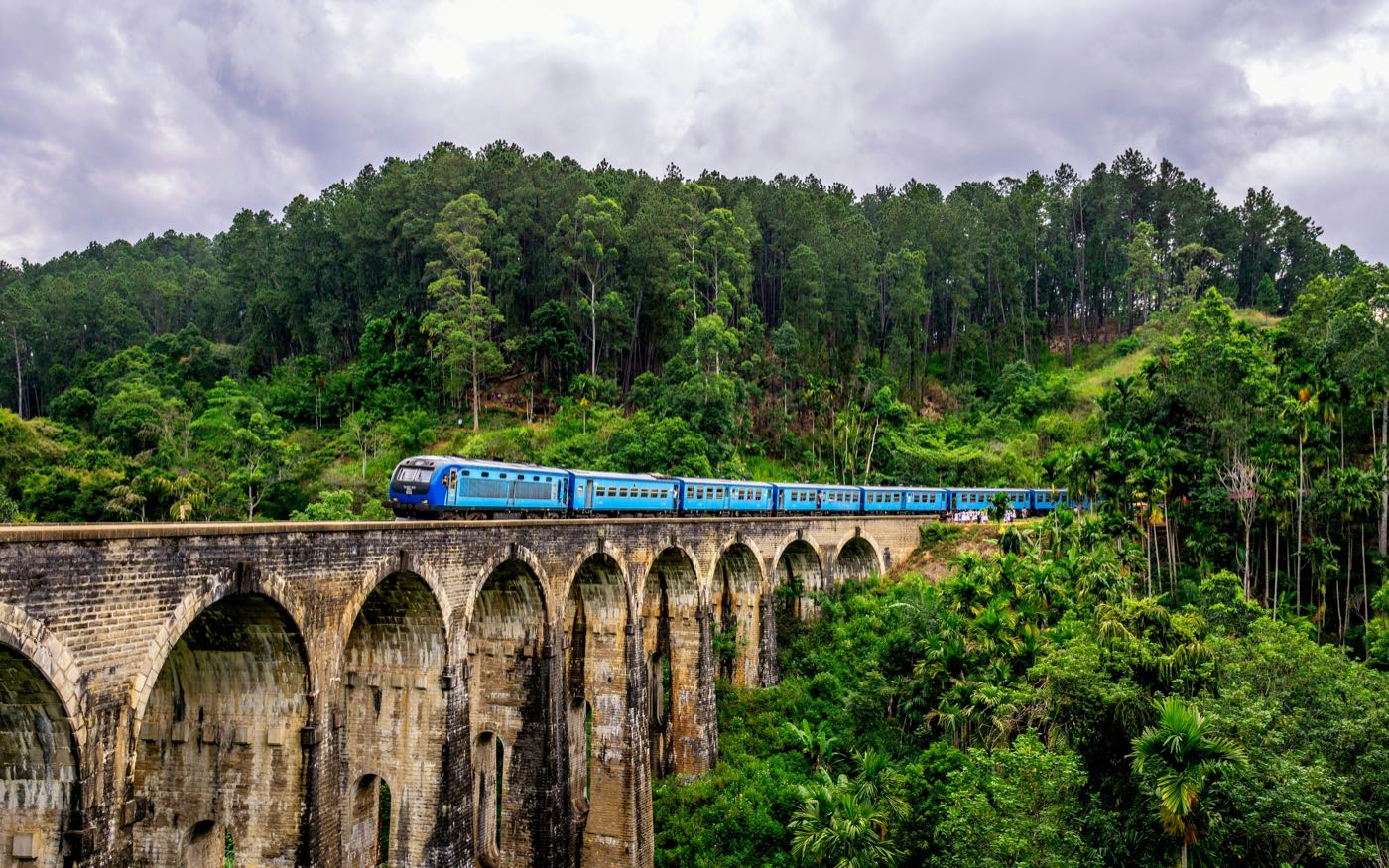
That leg is Kandy to Ella. It takes six or seven hours to cover a distance a car does in four, and it is the reason half the people on this trip came. It climbs through tea estates and cloud forest, the doors stay open, and the last two hours are the good ones. Book reserved second class, and book it as far ahead as the system will let you. The reserved cars sell out weeks in advance in high season.
Colombo, briefly
Colombo gets one night here, and one night is the right number. Long-haul flights land in the small hours, and starting a four-hour drive north at 3am is how people spend day two asleep in the back of a van. But it is also not why you came: it is a working port city, and the good things in it are ordinary rather than spectacular.
So do the one thing that is genuinely lovely. Galle Face Green is a strip of grass along the sea wall where the entire city goes to walk at dusk, and the food carts along it are as good an introduction to Sri Lankan street food as you will get. Eat an isso wade standing up, watch the sun go, sleep.
Sigiriya, and the one early start
Sigiriya is a two-hundred-metre block of hardened magma standing alone above the jungle, and on top of it a fifth-century king built a palace. Kashyapa took the throne by walling his father up alive, expected his brother to come for him, and put his court somewhere that could see an army coming for a day in every direction. He reigned eighteen years. It has been abandoned for fifteen hundred.
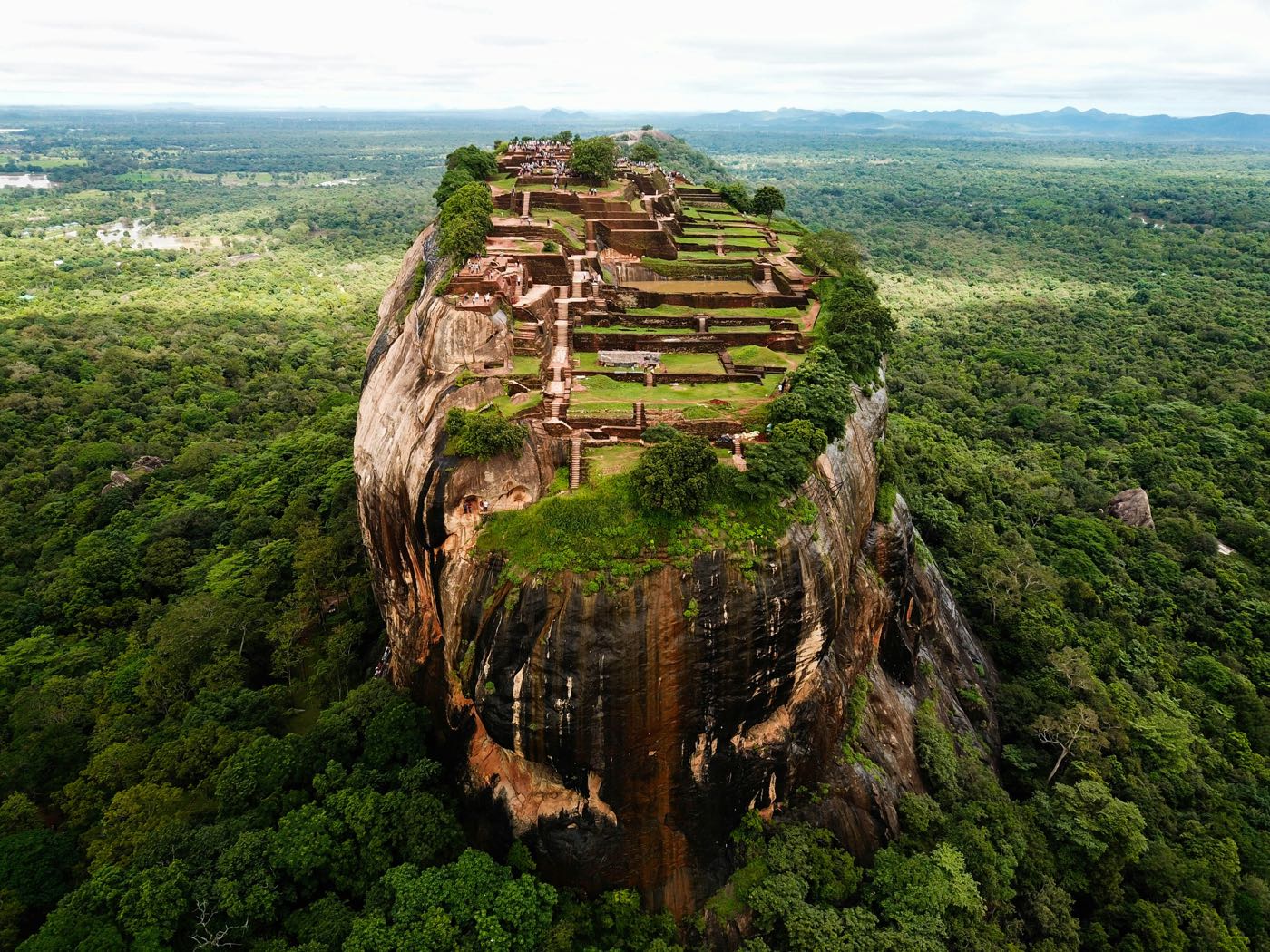
The climb is about 1,200 steps and takes an hour at a civilised pace. Halfway up, in a sheltered pocket of the rock face, are the frescoes: women in ochre and green, painted in the fifth century and still bright. Below them runs the Mirror Wall, polished plaster that visitors have been scratching graffiti into since the eighth century, some of it now studied as literature. The last stretch goes up between two enormous carved paws, all that survives of a lion gateway you were meant to walk into the mouth of.
This is the one morning the title of this article lies about. Go at opening: the stairs are exposed, the rock holds heat like a griddle, and by ten there is a queue on the final staircase that you do not want to be standing in. It is worth the alarm, which is not something said lightly here.
That leaves the rest of the trip's most flexible afternoon. Dambulla's royal cave temples are twenty minutes down the road and easy to fold into the drive in: five caves under an overhang, filled with something like 150 Buddhas and painted ceilings that follow the curve of the rock. And in the evening, climb Pidurangala instead: it is shorter, rougher, mostly empty, and it is where you go to look at Sigiriya rather than from it.
Kandy, and why two nights
Kandy was the last capital of the Sinhalese kingdom, the seat that held out against the Portuguese and the Dutch and only fell to the British in 1815. The old royal city sits in a bowl of hills around an artificial lake, and it is a UNESCO World Heritage site largely on the strength of what is at its centre: the Temple of the Sacred Tooth Relic, which holds a tooth of the Buddha and is one of the most important Buddhist sites anywhere.
Go for the evening puja rather than the middle of the day. There are three a day, drummers lead it, the inner chamber opens, and the whole thing is a working act of worship rather than a performance for visitors. Dress covers shoulders and knees, and shoes come off at the gate.
The second day is why two nights. The Royal Botanic Gardens at Peradeniya, twenty minutes out of town, are 60 hectares of colonial-era plant collecting: an avenue of royal palms, a fig tree with a canopy the size of a tennis court, an orchid house. Then walk the lake loop in the late afternoon, which takes about an hour and is the nicest way to understand the shape of the town.
Ella and the hill country
Ella is a single street of guesthouses and cafés wedged into a gap in the mountains at about a thousand metres, and it exists in its current form almost entirely because of the view. On a clear morning you can see straight down the Ella Gap to the southern plains and, on a very clear one, the sea. It gets cold at night, which after Colombo feels like a gift.
The two things everybody does are both walks and both worth it. Nine Arch Bridge is a colonial-era railway viaduct built, so the story goes, without steel during the First World War; walk in along the track from the Ella end rather than driving to the viewpoint, because arriving on foot through the tea is the whole point. Little Adam's Peak is about forty minutes up, genuinely fine in trainers, and gives you the gap from above.
If you have energy left, Ella Rock is the harder, quieter, better version of the same walk: three to four hours return, and easy to get lost on without a guide.
Yala, from Tissamaharama
Tissamaharama is not a destination, it is a base: a small town beside an ancient reservoir about three hours down from the hills, and the closest sensible place to sleep before a Yala safari. One night is all it needs.
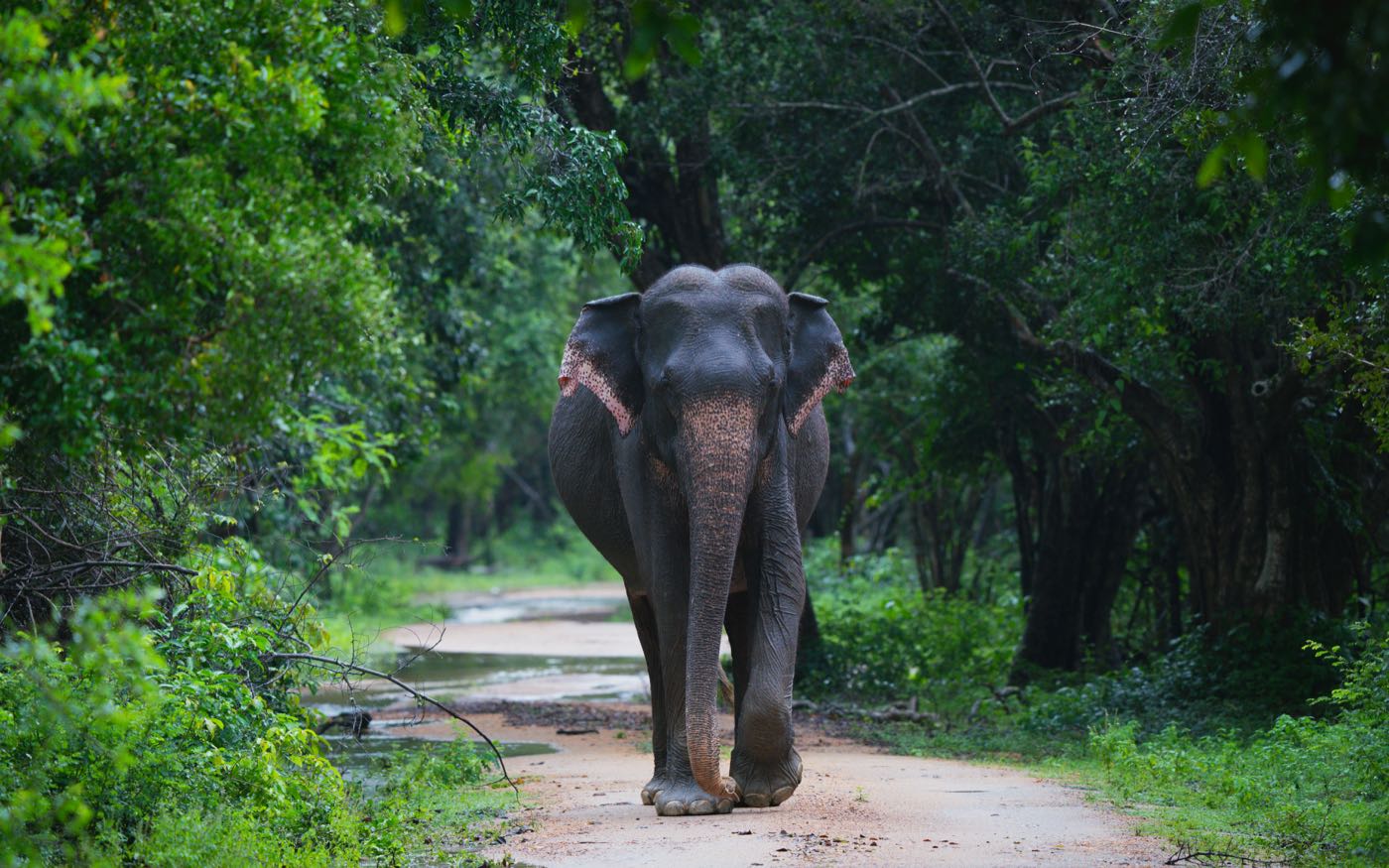
Yala is the reason. It has one of the highest leopard densities of any national park in the world, along with elephants, sloth bears and a genuinely absurd amount of birdlife. Block 1 is the busiest section by a distance, and in the middle of the day the tracks can feel like a car park with elephants. Take the afternoon drive instead: fewer vehicles, better light, and the animals are moving again by four.
Mirissa, and stopping
The last two nights are on the south coast, and they are deliberately unstructured. Mirissa is a crescent of sand with a headland at one end, a fishing harbour at the other, and Coconut Tree Hill in between, a spit of palms above the water that is on approximately every Sri Lanka photograph ever taken. Go at golden hour and accept that you will not have it to yourself.
From November to April, blue whales pass close enough offshore that Mirissa is one of the more reliable places in the world to see them, and boats leave from the harbour at dawn. That is the second early start in eleven days, it is entirely optional, and unlike Sigiriya nobody will mind if you skip it.
Galle is half an hour west if you want one more thing: a Dutch-built fort on a promontory, the ramparts still intact, now full of cafés and jewellers. It makes an easy afternoon. Or do not, and stay on the beach. The second Mirissa day has nothing on it on purpose, because a day with nothing on it is a plan.
Getting out again
Worth planning before you book the flight home, because it is the one part of this trip that can undo the rest of it. Mirissa is on the south coast; Bandaranaike International is north of Colombo. That is about three and a half hours by road, most of it on the Southern Expressway, and it is the longest single drive in the whole itinerary.
An evening departure is comfortable: have a last morning on the beach, leave after lunch, arrive with time to spare. A morning departure is not: it means leaving Mirissa in the dark, which is exactly the thing this itinerary was built to avoid. If your flight goes early, spend the final night near the airport at Negombo instead of at the beach, and treat day ten as the last real day.
The itinerary, day by day
10 nights · Colombo → Sigiriya → Kandy → Ella → Tissamaharama → Mirissa
Colombo
Night 1One night near the coast road, walkable to dinner. Nothing fancy: it is a landing pad.
- Day 1 · EveningSunset on Galle Face GreenStreet food carts set up along the promenade from about five.
- Colombo → SigiriyaDay 2 · By road, about 4 hoursNorth out of Colombo into the dry zone. Dambulla is on the way in, which is why it sits on the arrival afternoon.
Sigiriya
Nights 2–3Two nights within sight of the rock if you can. Waking up to it is half of why you came north.
- Day 2 · AfternoonDambulla cave templesFive caves under one overhang, about 150 Buddhas, painted ceilings following the curve of the rock.
- Day 3 · MorningClimb SigiriyaGo at opening. Around 1,200 steps, an hour at a civilised pace, and the stairs are fully exposed by ten.
- Day 3 · EveningPidurangala Rock at sunsetShorter, rougher and mostly empty. This is where you look AT Sigiriya rather than from it.
- Sigiriya → KandyDay 4 · By road, about 2½ hoursBack south out of the dry zone and up into the hills.
Kandy
Nights 4–5Two nights above the lake if the budget stretches. The walk down into town is nicer than the walk up.
- Day 4 · EveningTemple of the Sacred Tooth RelicGo for the evening puja rather than the middle of the day. Shoulders and knees covered, shoes off at the gate.
- Day 5 · MorningRoyal Botanic Gardens, Peradeniya
- Day 5 · AfternoonWalk the lake loopAbout an hour, and the best way to understand the shape of the town.
- Kandy → EllaDay 6 · By train, about 6½ hoursThe one leg worth doing by rail rather than road. The last two hours are the good ones.Book ahead: Reserved second class, as far ahead as the system allows. The reserved cars go weeks in advance in high season.
Ella
Nights 6–7Two nights with a view down the gap. It is the whole reason to sleep here rather than pass through.
- Day 6 · AfternoonNine Arch BridgeWalk in along the track from the Ella end rather than driving to the viewpoint.
- Day 7 · MorningLittle Adam's PeakAbout forty minutes up, and genuinely fine in trainers.
- Ella → TissamaharamaDay 8 · By road, about 3 hoursDown out of the hills. Winding for the first hour, then flat and fast.
Tissamaharama
Night 8One night close to the Yala road so the afternoon drive does not start with an hour in a van.
- Day 8 · AfternoonYala block one, afternoon driveQuieter than the dawn drive, the light is better, and the animals are moving again by four.
- Tissamaharama → MirissaDay 9 · By road, about 3 hoursWest along the coast road.
Mirissa
Nights 9–10Two nights on the quiet end of the bay, east of the harbour.
- Day 9 · EveningCoconut Tree Hill at golden hour
- Day 10 · MorningNothing, on the beachLeft in deliberately. Galle is half an hour west if you want more; a day with nothing on it is a plan.
- Mirissa → Bandaranaike International AirportDay 11 · By road, about 3½ hoursUp the Southern Expressway and around Colombo. Fine for an evening flight; a morning one means leaving before dawn, so sleep near the airport instead.
Where to stay and what to book are priced live when you open the trip, never printed here, because prices in an article are wrong within a month. Some booking links pay waddlio a commission, and the app says so on the link itself.
Ready when you are.
Pick a start date and the whole thing lands in your trip, dated. Then send one link to everyone who's coming.
Start this tripAll guides